Belgrade's Historic Heart: A Walk Through Kalemegdan, Skadarlija & the Old Town
From Kalemegdan's ancient ramparts to Skadarlija's music-filled kafanas, Belgrade's old town packs two thousand years into one walkable loop. Here's how to explore it in 2026 - hours, prices and local tips included.


Belgrade Life ekibi
10 Temmuz 2026 tarihinde yayınlandı
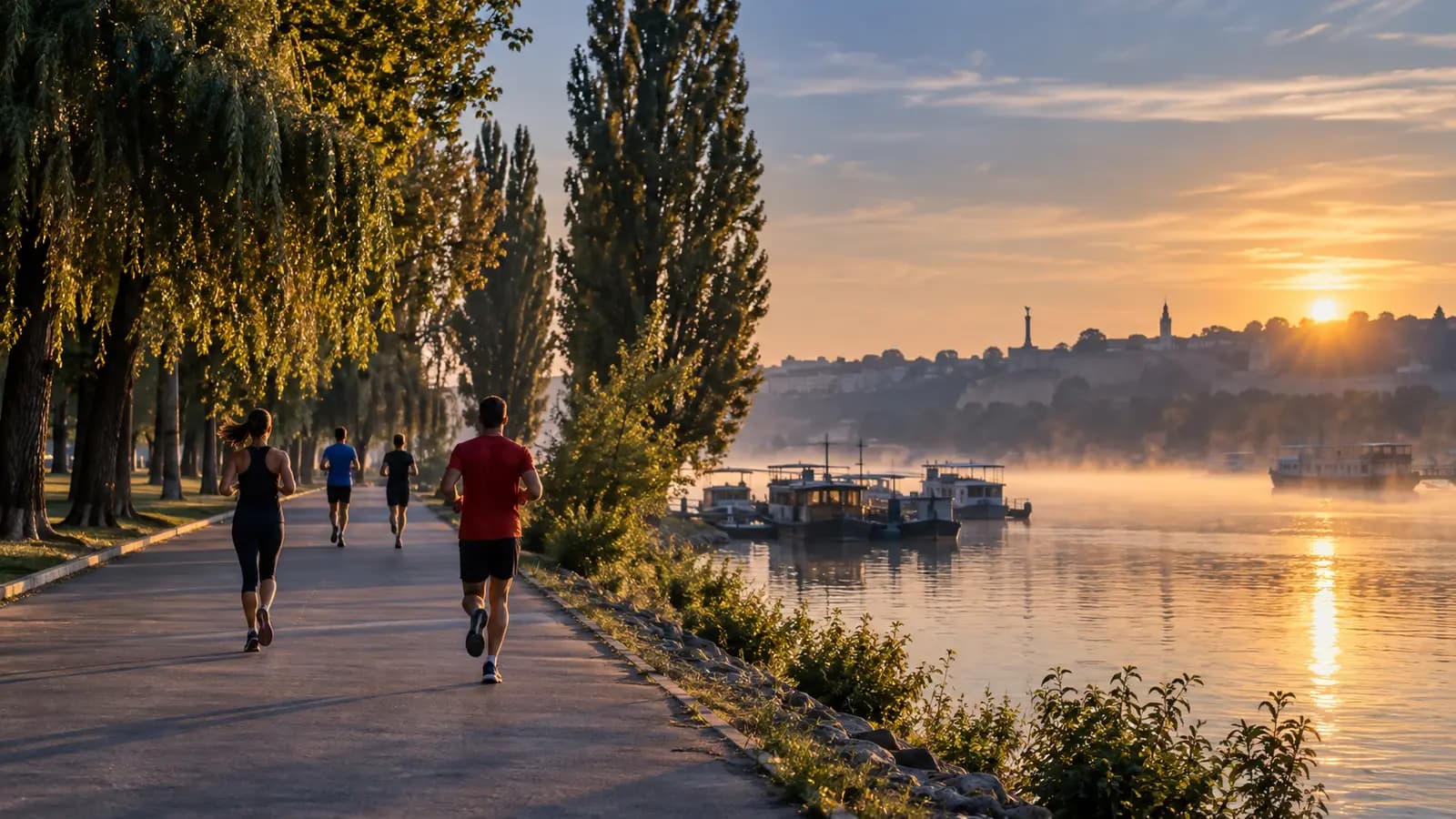
Belgrade wears its history out in the open. Where the Sava River pours into the Danube, the old town rises on a limestone ridge that has been fought over for two millennia - Celts, Romans, Byzantines, Ottomans and Habsburgs all left their mark. For expats and nomads, this compact district is the easiest way to feel the city's pulse: a fortress park, a pedestrian promenade and a cobblestone street of taverns, all within a fifteen-minute walk of each other. Here is how to explore it well.
Getting your bearings
The historic heart sits in the Stari Grad (Old Town) municipality. Picture a straight line: Republic Square (Trg Republike) at one end, the pedestrian street Knez Mihailova running northwest, and Kalemegdan Fortress anchoring the far tip above the river confluence. You can walk the whole spine in twenty unhurried minutes.
Good news for your budget: since 1 January 2025, Belgrade's public transport has been free for everyone, tourists included - no ticket, card or app needed for regular buses, trams and trolleybuses, and still the case in 2026. The scenic tram 2 loops around the old town and past the fortress; just hop on. The main paid exceptions are the A1 airport minibus (around 400 RSD) and a handful of express minibus lines.
Kalemegdan: two thousand years in a park
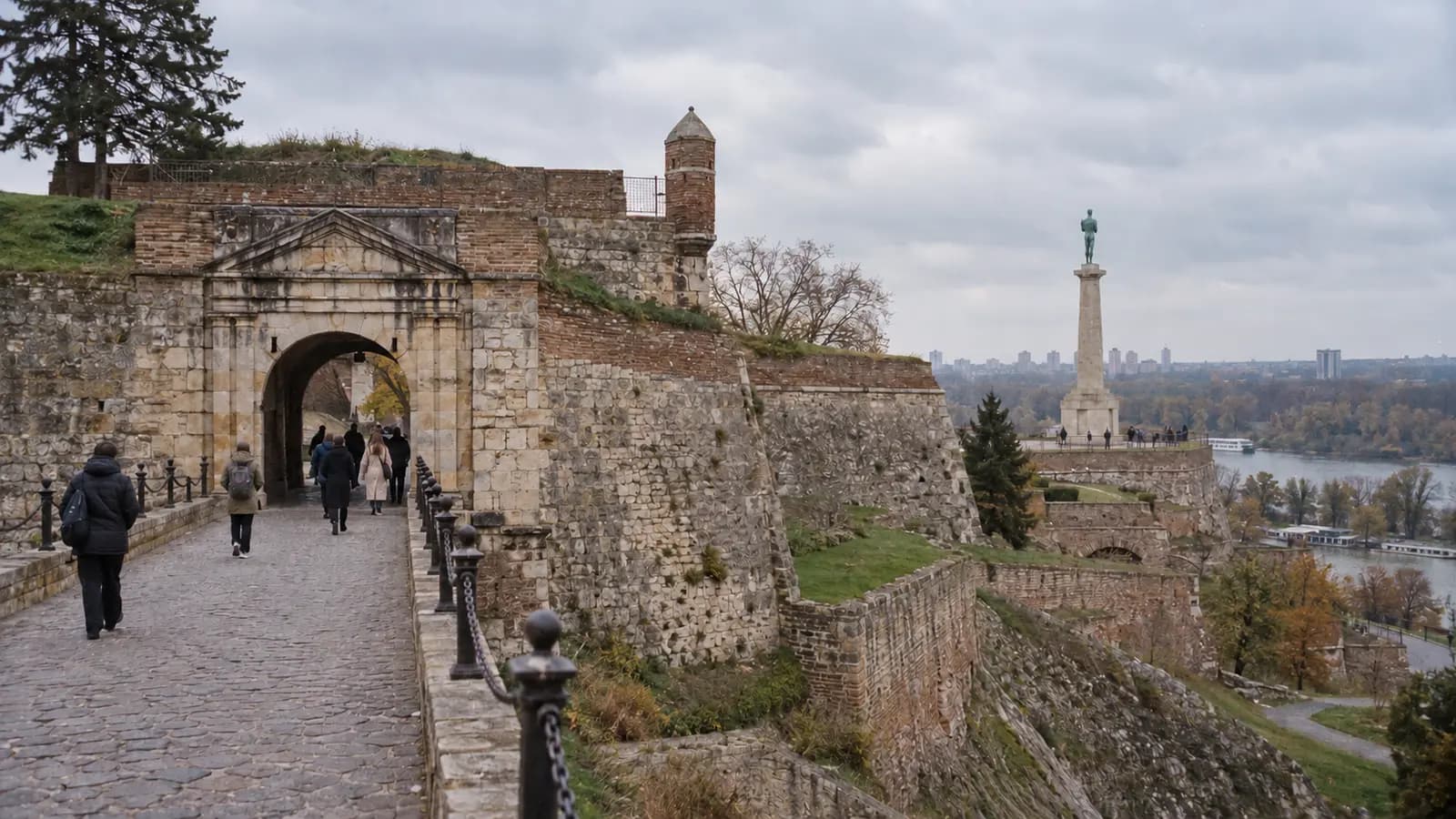
Kalemegdan Park and the Belgrade Fortress are the city's green lungs and its most-visited sight. The grounds are open 24/7, year-round, and entry is free - you pay only for specific attractions inside. Come for the ramparts and stay for the view: the terrace by the Victor monument offers one of the Balkans' great panoramas, the point where the green Sava meets the wider Danube.
What to look for
- Pobednik (The Victor) - the fortress's iconic 14-metre bronze, sculpted by Ivan Meštrović, cast in 1913 and finally raised in 1928. Facing the rivers rather than the city, he is Belgrade's unofficial emblem.
- Ružica Church & St Petka Chapel - tucked into the Lower Town, ivy-clad Ružica was once an Austrian gunpowder depot; step inside for chandeliers famously fashioned from spent bullet casings, swords and cannon parts.
- Nebojša Tower (Kula Nebojša) - a 15th-century riverside tower turned museum, down by the Danube, telling the fortress's Ottoman-era story.
- The Military Museum - open-air artillery lines the walls for free, while the indoor collection charges a modest fee.
Fortress practicalities (as of 2026)
Indoor attractions keep seasonal hours: roughly 11:00–19:00 from mid-April to mid-October, and 10:00–17:00 in winter, with last entry about 30 minutes before closing. The Military Museum costs around 350 RSD for adults and 250 RSD for students (family tickets about 500 RSD); an English-language guided curator tour runs closer to 5,000 RSD if booked ahead. At roughly 117 dinars to the euro, a museum entry is only a couple of euros. Check the official Belgrade Fortress and Military Museum sites before you go, as hours shift with the season.
Burada reklam verin
Banner'ınız burada olabilir
İnsanlar Belgrad'da zamanlarını planlamak için bu sayfayı açıyor. Mekânınızı, etkinliğinizi ya da markanızı onlara gösterin.
Knez Mihailova & Republic Square
Belgrade's main promenade, Knez Mihailova, links the fortress to Republic Square. It is a lively parade of 19th-century façades, bookshops, boutiques, buskers and cafés - the classic spot to sit with a coffee (200–260 RSD) and watch the city go by. At its southern end, Republic Square is the natural meeting point, marked by the Prince Mihailo monument ("meet me at the horse," locals say) and the National Museum, whose collection spans from Serbian medieval frescoes to a room of Impressionists.
Skadarlija: the bohemian quarter
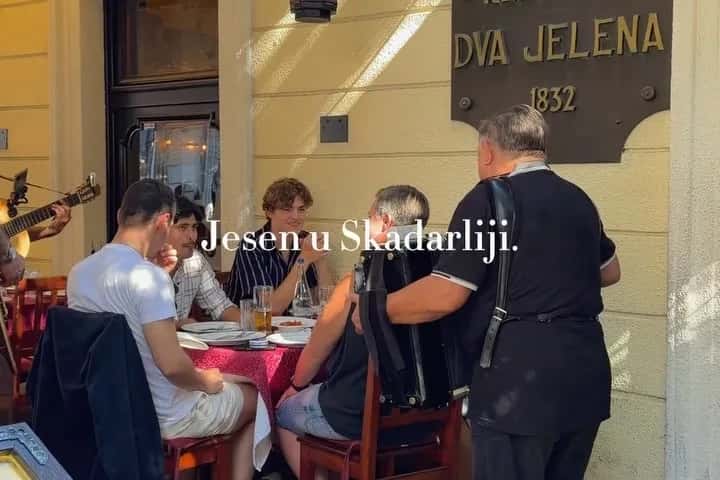
A five-minute walk from Republic Square, Skadarlija is a 400-metre run of uneven cobblestones (kaldrma) that has been Belgrade's bohemian heart since the late 1800s - the city's answer to Montmartre. By evening its kafanas (traditional taverns) fill with the sound of strolling accordion-and-violin orchestras, and the smell of the grill hangs in the air.
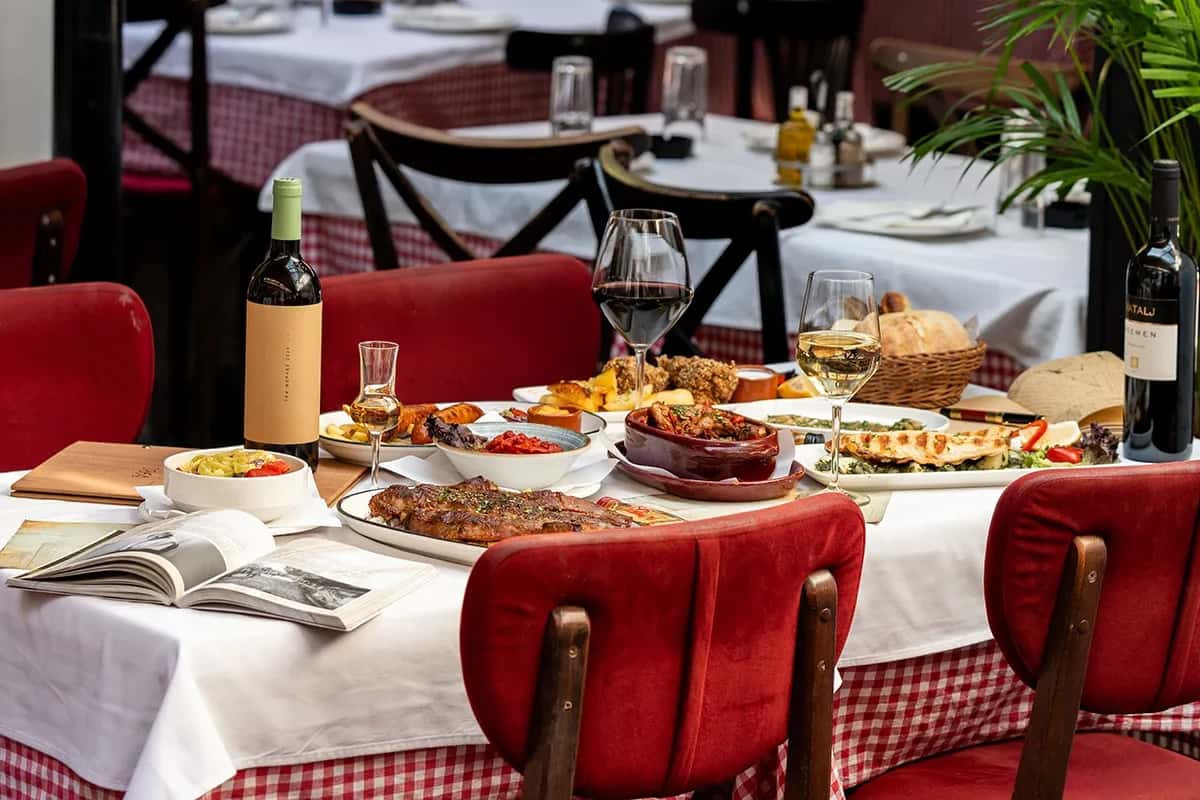
This is the place to eat Serbian classics: ćevapi (grilled minced-meat fingers), pljeskavica (a giant spiced patty) and sarma (stuffed cabbage rolls), washed down with rakija or a domestic wine. Several of the taverns are living history - Tri Šešira ("Three Hats," open since 1864), Dva Jelena ("Two Deer"), Zlatni Bokal and the tiny Mali Vrabac have all been serving for generations.
Bilmekte fayda var
Making a day of it
The natural rhythm is to start at Republic Square with a morning coffee, stroll up Knez Mihailova to the fortress, spend a couple of hours on the ramparts (best at sunset, when the light over the rivers is unbeatable), then double back to Skadarlija for a long, music-filled dinner. Wear comfortable shoes - the cobblestones are charming but merciless - and carry a little cash, as smaller kafanas and the roving musicians still prefer dinars even though cards are widely accepted. It is a single, walkable loop that packs in two thousand years of Belgrade.
Bu rehberdeki mekânlar

Military Museum
Müzeler, Stari Grad


Founded in 1878 and located inside Belgrade Fortress at Kalemegdan, this museum traces Serbian and Yugoslav military history across more than 30,00…
Tri Šešira
Restoranlar, Stari Grad


Tri Šešira (Three Hats) is one of the oldest and most famous kafanas in the bohemian Skadarlija quarter, opened in 1864.
Dva Jelena
Restoranlar, Stari Grad
Founded in 1832, Dva Jelena is Belgrade's oldest restaurant and a legendary symbol of Skadarlija, the city's bohemian quarter.
10 Temmuz 2026 tarihinde kontrol edildi
Bu rehber işine yaradı mı?
Eskimiş bilgiyi bildir