Red Star vs Partizan: The Eternal Derby and How to Get Tickets (2026-27)
Where Partizan and Red Star play in 2026-27, how to buy EuroLeague and football tickets from the official sellers, the ID rules, derby tickets and where to sit.


Belgrade Life ekibi
3 Ekim 2026 tarihinde güncellendi, ilk yayın 24 Temmuz 2026
Bu sayfada: 12 bölüm
- Where the clubs play in 2026-27
- EuroLeague basketball tickets
- The Eternal Derby in basketball
- Football tickets
- The football derby
- The rules: ID, ticket limits and alcohol
- Where to sit as a neutral
- What the atmosphere is like
- Two clubs, half a kilometre apart
- Getting there
- Frequently asked questions
- Bu rehberdeki mekânlar
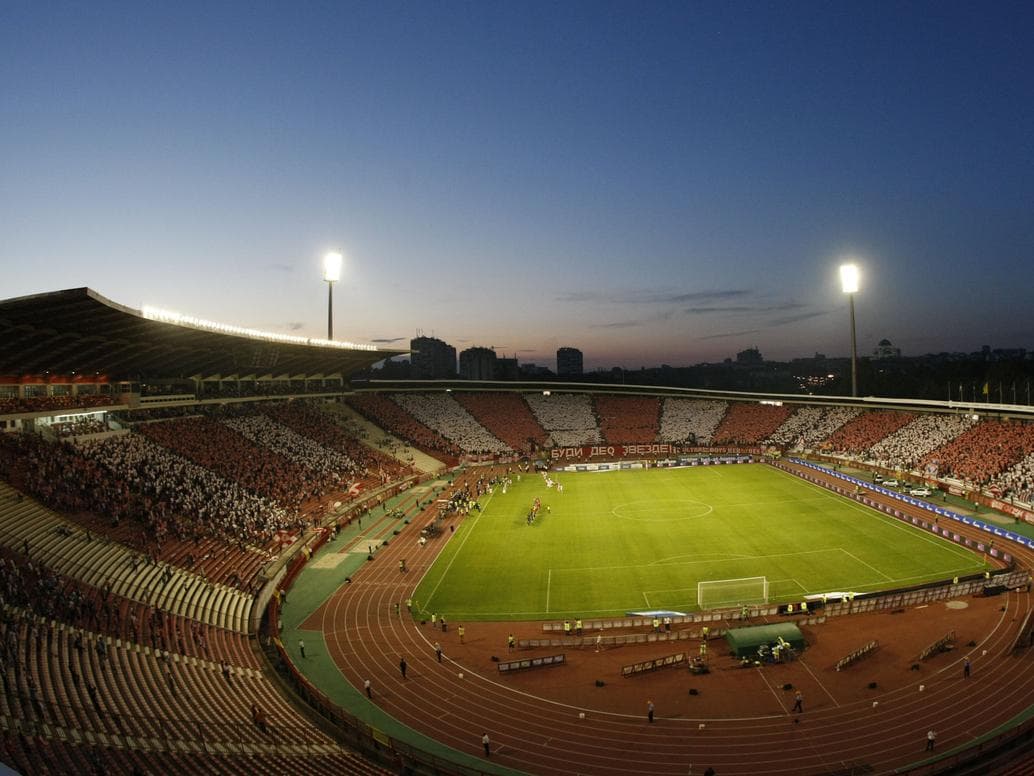
Red Star (Crvena zvezda) and Partizan are the two great Belgrade clubs, in football and in basketball, and the Eternal Derby (večiti derbi) between them is the city's biggest sporting occasion. This guide explains where each team plays in the 2026-27 season, how to buy tickets from the official sellers, the rules you need to know (bring your passport), where a neutral visitor should sit and what a derby day is really like. We checked the information in October 2026. Prices and sales windows are set game by game, so treat the figures below as recent examples.
Where the clubs play in 2026-27
| Team | Venue | Official tickets |
|---|---|---|
| Partizan basketball (EuroLeague) | Belgrade Arena; some games at Hala Aleksandar Nikolić | partizan.basketball/tickets |
| Red Star basketball (EuroLeague) | Belgrade Arena; some games at Hala Aleksandar Nikolić | kkcrvenazvezda.ticketaza.com |
| Red Star football | Rajko Mitić Stadium (the Marakana), Ljutice Bogdana 1a | crvenazvezda.iticket.rs |
| Partizan football | Partizan Stadium, Humska 1 | Ticketline (ticketline.rs) and the stadium box office |
| Serbia national team | Rajko Mitić Stadium | Announced by the Football Association of Serbia (fss.rs) |
Belgrade Arena in New Belgrade is the hall many visitors still know as Štark Arena. The EuroLeague schedule moves a few home games to the smaller Hala Aleksandar Nikolić (Pionir) next to Tašmajdan park, so always check the hall on the game's page before you set off. You will find upcoming matches in our sport events listing.
EuroLeague basketball tickets
Red Star. Single-game tickets are sold online through the club's ticket shop (tickets.kkcrvenazvezda.rs leads to the same shop on Ticketaza) and in person at the KKCZ shop on the north plateau of Belgrade Arena, at the club office at Mali Kalemegdan 2, and at the arena's south box office on match day. For the season opener against Žalgiris, online sales opened two days before the game, and day tickets cost 2,500 RSD in the side sectors of the upper level and 3,000 RSD in the central sectors. At the start of the season the club said a EuroLeague penalty had cut the hall's capacity by 20 percent, with some sectors closed, so big games sell out faster.
Partizan. Tickets are sold through your profile on partizan.basketball, which works with an email link rather than a password. Club membership costs 3,000 RSD for adults and 1,500 RSD for children and gives priority for single-game tickets. For the opener against Milano, the club sold online with a 30 percent discount until the day before the game, with the cheapest seat at 2,100 RSD. Any seats left went on sale at the arena's south box office on match day.
Season tickets for both clubs are already sold out or closed for 2026-27, so as a visitor you will be buying single-game tickets. Sales usually open a few days before each game: follow the club's news page and buy online as soon as the game appears.
The Eternal Derby in basketball
In the 2026-27 EuroLeague, Partizan host Red Star on Thursday 22 October 2026 at 20:45 at Belgrade Arena, and Red Star host Partizan on 11 February 2027. Sales rules are announced only a few days before each derby. Last season, Red Star sold derby tickets only to season-ticket holders, with up to four tickets per season ticket, and the away allocation was about 1,000 seats. Expect the same pattern: if you are not a member or season-ticket holder, plan on a regular EuroLeague night against another opponent instead.
Burada reklam verin
Banner'ınız burada olabilir
İnsanlar Belgrad'da zamanlarını planlamak için bu sayfayı açıyor. Mekânınızı, etkinliğinizi ya da markanızı onlara gösterin.
Football tickets
Red Star at the Marakana. Tickets are sold on crvenazvezda.iticket.rs, which has an English version. For the 2026-27 Conference League home games (Copenhagen on 22 October, Inter Club d'Escaldes on 5 November and Trabzonspor on 17 December) prices are 1,200 RSD in the North stand, 2,200 RSD in the East, 2,600 RSD in the West and 5,000 RSD in the Siniša Mihajlović stand.
Partizan at Humska. The club sells through Ticketline, mostly as a digital ticket in your phone's wallet, with a Ticketline point at the north stand of the stadium. Season tickets cost from 4,000 RSD in the South stand to 11,000 RSD in the West. Single-match sales are announced on partizan.rs before each game. The club says children under 16 cannot be in the stadium without an accompanying adult.
Serbia. The national team plays Germany in the Nations League on 13 November 2026 at 20:45 at the Rajko Mitić Stadium. Watch fss.rs for the sale of single tickets.
The football derby
The 180th league derby was played at the Marakana on 6 September 2026. Home tickets cost from 600 RSD in the North stand to 2,500 RSD in the Siniša Mihajlović stand, sold online from the Monday of match week and at the stadium box office. Partizan fans could buy only South stand tickets, at 600 RSD, and only at the Partizan Stadium box office, with a limit of four tickets per person with valid ID. The return league derby falls in the second half of the season. Dates are confirmed only a few weeks ahead and can move for television.
The rules: ID, ticket limits and alcohol
Serbia's law on preventing violence at sports events applies to all of these games:
- Tickets may only be sold to people with an identification document, and the seller records your name and your personal or passport number.
- One person can buy at most four tickets in total, whatever the sales channel.
- You will be refused entry without ID. Children under 16 must be accompanied by a parent or guardian.
- On the day of a high-risk match, tickets are sold only at the venue or right next to it.
- Alcohol is banned during the event in the venue and within 1 km of the centre of the pitch in Belgrade.
- Pyrotechnics, poles, bottles and similar objects are not allowed in, and stewards can turn away anyone who is drunk.
Because tickets are tied to your name and ID, buy only from the official sellers above. Street touts and resale websites are not a safe way in.
Where to sit as a neutral
At football, the ends behind the goals belong to the organised supporters: Red Star's Delije in the North stand at the Marakana, Partizan's Grobari in the South stand at Humska. For a first visit pick the East or West stand. In a derby at the Marakana the South stand is the away section, sold only to Partizan fans, so do not buy it by mistake. At basketball, the central sectors and the side stands are calmer than the area behind the baskets. Wherever you sit, do not wear the other club's colours, do not photograph the ultras up close and keep political gestures to yourself.
What the atmosphere is like
A derby in Belgrade is loud, smoky and tribal: huge choreographed displays, chants that do not stop for ninety minutes and a police operation to match. It is spectacular, but not a family day out the way a Premier League or Bundesliga match might be. The UK government's travel advice notes violence and petty crime around Red Star and Partizan derbies and warns of long delays leaving the ground while police separate the fans. A EuroLeague night against a foreign team, or a European football game, gives you most of the noise with far less risk.
Two clubs, half a kilometre apart
Both clubs were founded in 1945: Red Star in March, Partizan in October as the club of the Yugoslav army. Their football grounds sit in southern Belgrade, barely half a kilometre apart, so on derby day the whole neighbourhood belongs to football. Red Star's Marakana, opened in 1963 and renamed in 2014 after the club legend Rajko Mitić, is the largest stadium in Serbia. In 1991 Red Star won the European Cup in Bari, still the only Serbian club to do so. Partizan play in black and white at the former JNA Stadium in Humska. Both clubs also run basketball, water polo and volleyball teams, and their basketball rivalry is just as fierce.
Getting there
Belgrade's buses, trams, trolleybuses and BG Voz trains have been free for everyone since January 2025. Belgrade Arena is a short walk from Novi Beograd railway station. The Marakana and the Partizan Stadium are neighbours near Autokomanda, on the Bulevar oslobođenja corridor. Hala Aleksandar Nikolić is next to Tašmajdan park in the centre. Lines are often rerouted around big matches, so check your route on bgprevoz.rs or a map app on the day, and allow time for the security checks at the gates.
Frequently asked questions
How do I buy Partizan basketball tickets?
Create a profile on partizan.basketball/tickets and buy online when sales open, usually a few days before the game. Members get priority. If seats are left, the Belgrade Arena south box office sells them on match day.
How do I buy Red Star tickets?
For basketball, use the club's shop on kkcrvenazvezda.ticketaza.com or the KKCZ shop at Belgrade Arena. For football, use crvenazvezda.iticket.rs, which has an English version, or the Marakana box office.
Do I need my passport to go to a match in Belgrade?
Yes. Serbian law requires an ID document to buy a ticket and to enter, and the seller records your passport number. Residents can use their Serbian ID or residence card.
Can tourists get Eternal Derby tickets?
It is difficult. Clubs usually sell derby tickets first, or only, to members and season-ticket holders, and the rest go within hours. A regular EuroLeague game or a European football night is much easier to get into.
Is Belgrade Arena the same as Štark Arena?
Yes. The hall in New Belgrade was called Štark Arena from 2017 to 2024 and is now Belgrade Arena again. Most EuroLeague home games of both clubs are played there.
Is it safe to go to a football match in Belgrade?
Regular league and European games are generally fine if you sit in the East or West stand and follow stewards' instructions. Derbies carry a higher risk of trouble around the ground, so go with someone who knows the routine and leave enough time to get out.
Bu rehberdeki mekânlar


Tašmajdan Park
Parklar, Palilula


A central park whose name comes from 'taš majdan' (stone quarry), as it sits above a former Roman-era quarry with underground tunnels.
3 Ekim 2026 tarihinde kontrol edildi
Bu rehber işine yaradı mı?
Eskimiş bilgiyi bildir