A Walking Guide to Zemun: Belgrade's Old Austro-Hungarian Quarter
Zemun is Belgrade's old Austro-Hungarian quarter, a riverside town of baroque streets, a hilltop tower and Danube fish taverns. This walking guide covers the route and the history.


By the Belgrade Life team
Published 24 July 2026

A different empire, a different town
Zemun looks and feels unlike the rest of Belgrade, and there is a simple historical reason. For roughly two centuries, until the end of the First World War, the Danube here was an international border. Belgrade proper was the Ottoman, then Serbian, side, and Zemun was the southern edge of the Habsburg (Austro-Hungarian) Empire. That legacy shows in the low pastel houses, the baroque church towers, the street grid and the general Central European air. Today Zemun is officially a municipality of Belgrade, about six kilometres from the centre, but it still carries itself like the separate town it once was.
Getting there
Several city bus lines run from central Belgrade to Zemun in around twenty to thirty minutes. Nicer still, if the weather is good, is to walk or cycle along the Danube from the Ušće area in New Belgrade, following the river straight into Zemun's waterfront. Start your walk at the quay and work uphill.
The walking route
The Danube quay (Kej oslobođenja)
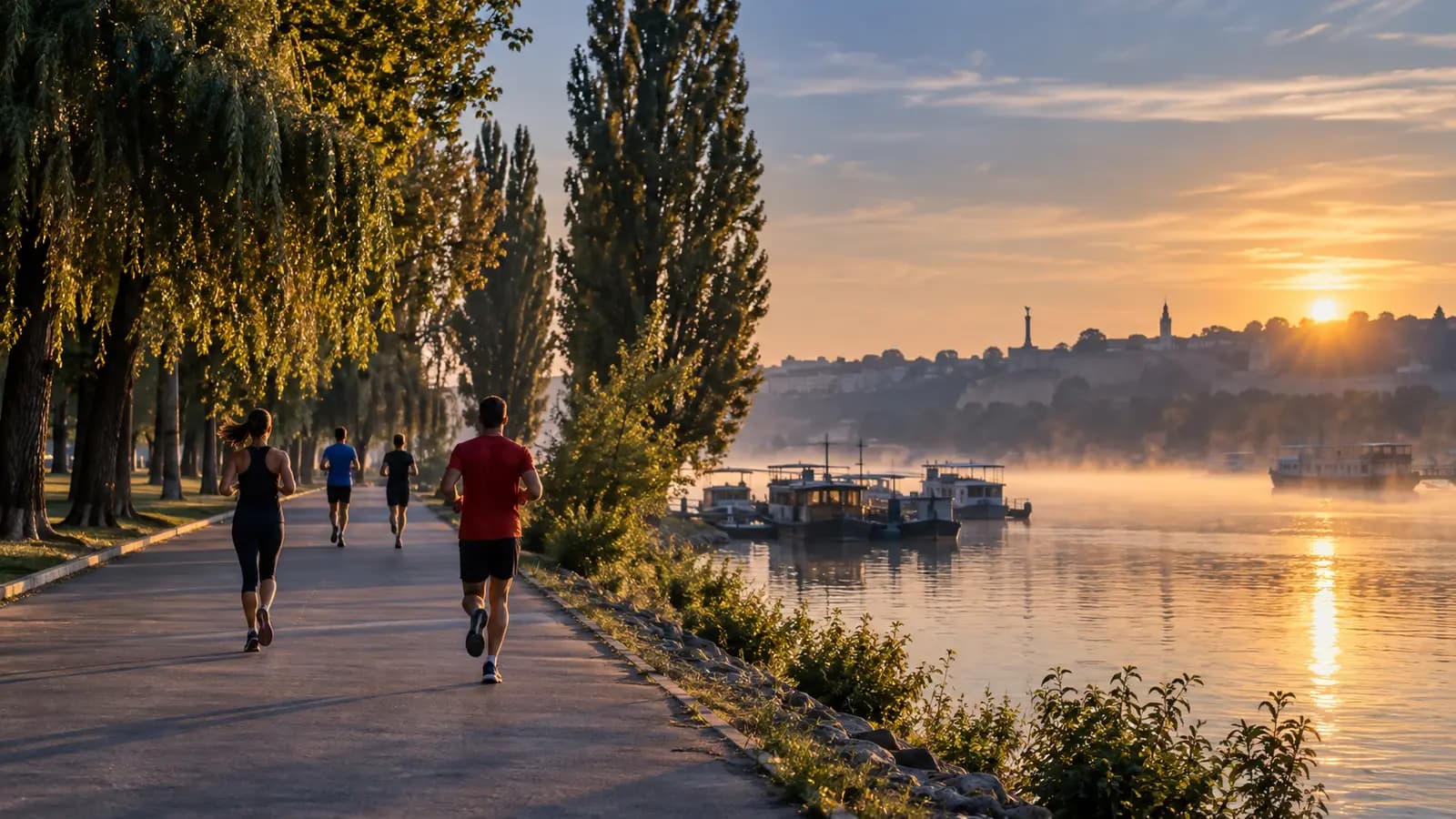
Begin on the riverside promenade, a wide, tree-lined walk busy with strollers, cyclists and swans. This is Zemun at its most sociable. Old fishing boats bob at the edge, and a line of fish restaurants and cafes stretches along the water. The quay is the obvious lunch stop, so keep it in mind for later.
Gospodska Street
Turn inland along Gospodska ulica, the Gentleman's Street, Zemun's historic commercial spine. The restored facades, cafes and old shopfronts give the best sense of the prosperous border-town merchant class that built the quarter. It leads toward the main square and the old magistrate building.
The Church of St Nicholas
Nearby stands the Nikolajevska church, dedicated to St Nicholas and consecrated in 1745. It is the oldest surviving Orthodox church in the Belgrade area, with a tall baroque tower and a fine old iconostasis inside. It marks the older, uphill part of the quarter.
Up to Gardoš
Climb the narrow, slightly crumbling streets of the Gardoš hill, the oldest core of Zemun, laid out below the ruins of a medieval fortress. This is the most photogenic part of the walk, all uneven cobbles, vines and river glimpses between the houses.
The Gardoš Tower
At the top stands the Gardoš Tower, also called the Millennium Tower or the Tower of Sibinjanin Janko. It was opened in 1896 by the Austro-Hungarian authorities to mark a thousand years of Hungarian presence in the Pannonian plain, and it sits on the remains of the old Taurunum fortress. Climb it, or simply use the terrace beside it, for the best view in the whole quarter: the Danube, the confluence with the Sava, and the towers of New Belgrade beyond.
Advertise here
Your banner could be here
People open this page to plan their time in Belgrade. Put your venue, event or brand in front of them.
Where to eat
Zemun is famous across Belgrade for river fish. The restaurants along the quay serve fried and grilled freshwater fish, fish soup (riblja čorba) and local carp dishes, and eating them with a view of the Danube is the whole point of coming. Šaran is one of the long-established names, but the whole waterfront row is reliable. Away from the river, the bakeries and cafes of Gospodska Street are good for coffee and a break.
How long to allow
A relaxed loop of the quay, Gospodska Street, the old church, Gardoš hill and the tower takes about two to three hours on foot, more if you stop for lunch. It combines well with an early evening arrival, so you can climb the tower for sunset over the two rivers and then drop back down to the quay for dinner.
Good to know
Practical notes
- The tower charges a small entrance fee and keeps limited hours, shorter in winter.
- The quay restaurants are popular on weekends, so book ahead or arrive early for a riverside table.
- Bring cash for the tower and small cafes, though restaurants generally take cards.
Checked 24 July 2026
Was this guide useful?
Report outdated info