Your First 48 Hours in Belgrade: Arrival Essentials
A practical, step-by-step guide to your first two days in Belgrade - airport transfers, cash and cards, a local SIM, the city's free public transport, and the 24-hour registration rule every foreigner must follow.


By the Belgrade Life team
Published 10 July 2026
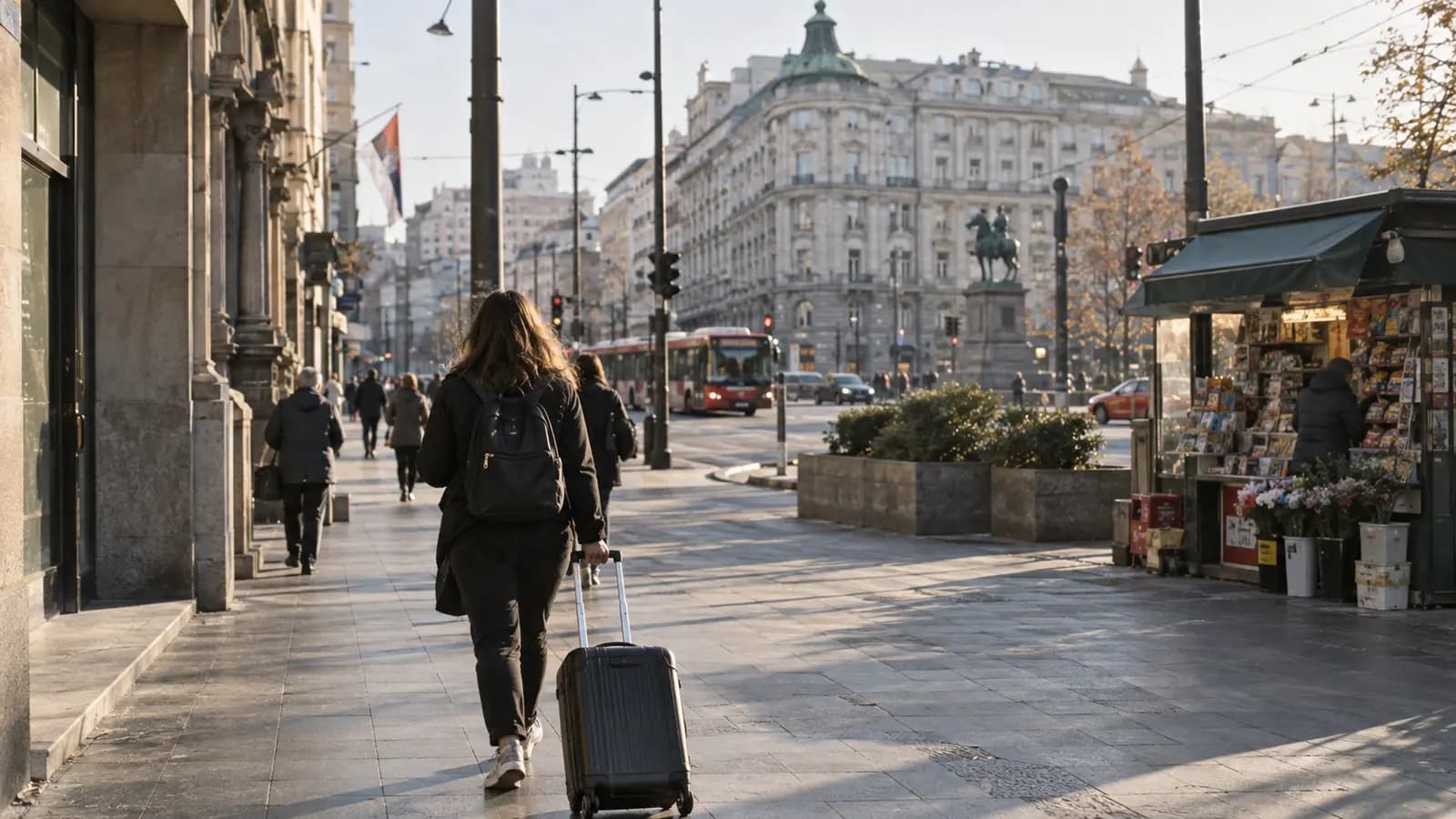
Welcome to Belgrade. The first two days in a new city are equal parts excitement and logistics, and getting the practical things right early - cash, a working phone, a way across town, and your paperwork - frees you to actually enjoy the place. Here is exactly what to do, roughly in order, from the moment you land.
Getting from the airport into the city
Nikola Tesla Airport (BEG) sits about 18 km west of the centre, and you have three sensible ways in:
- A1 minibus - the express shuttle runs to Slavija Square in the heart of town in roughly 25–30 minutes for around 400 RSD (about €3.50, as of 2026). It is cash-only in dinars, paid to the driver, so grab a little cash first.
- Official taxi - walk to the official taxi desk in the arrivals hall and take the slip with a fixed zone price. The city centre runs roughly 2,200–2,800 RSD (about €18–24), with surcharges at night (10pm–6am) and on weekends. Ignore anyone who approaches you offering a ride inside the terminal - those are the ones who overcharge.
- Ride-hailing apps - Yandex Go and CarGo both show the fare before you confirm, and are often cheaper than the rank. Just make sure the pin matches your actual terminal.
Money: dinars, cards and the "DCC" trap
The currency is the Serbian dinar (RSD). A few habits will save you real money:
- Skip the airport exchange counters and hotel desks - their rates are poor. Change money at a licensed menjačnica (exchange office) in town; they are on almost every central street.
- ATMs are everywhere. When one asks whether to charge you in dinars or your home currency, always choose dinars and decline the offered conversion - that "dynamic currency conversion" (DCC) quietly adds a bad exchange rate.
- Contactless is universal in Belgrade: Visa, Mastercard, Apple Pay, Google Pay and Revolut all work in shops and cafés. Still, carry some cash for bakeries, green markets, kiosks and the airport bus.
Good to know
Getting connected: a local SIM or eSIM
Three networks cover the country well: mts (Telekom Srbija), Yettel and A1. All three have kiosks in the arrivals area.
- Bring your passport. Since February 2025, every SIM must be registered to an ID at purchase, so you cannot buy one anonymously.
- As of 2026, expect roughly 300 RSD for an mts tourist starter (around 5 GB, one week) up to about 1,399 RSD for Yettel's tourist plan (around 50 GB for 30 days). A1's offers are comparable.
- Prefer to land already online? An eSIM set up before you fly (from around €5, depending on data) is the fastest option if your phone supports it.
Advertise here
Your banner could be here
People open this page to plan their time in Belgrade. Put your venue, event or brand in front of them.
Getting around: the free-transport surprise
Here is the pleasant shock for new arrivals: since 1 January 2025, regular city buses, trams and trolleybuses in Belgrade are free. There is no ticket, no card and no app to buy for standard lines - you simply board.
- Download the Beograd Plus app (or use Google Maps / Moovit) for live routes and timetables.
- The few exceptions that still cost money are the A1 airport minibus and a handful of E express lines, where you pay on board.
- Central Belgrade is compact and very walkable, so for most first-day errands you will not need transport at all; save the apps for longer hops across the river to New Belgrade.
The 24-hour rule: register your stay
This is the one bureaucratic step you must not skip. Every foreign national has to register their address - the so-called white card (bela karta) - within 24 hours of arrival.
- Staying in a hotel or most managed apartments? They register you automatically. Just confirm they have done it and that you have the slip.
- Staying in a private flat, an informal Airbnb or with friends? Go with your host to the nearest police station and register there. It is free of charge.
- Keep the confirmation safe - you may be asked for it when you leave or if you later apply for residence. If you change address, you re-register within 24 hours. Full details are on the Ministry of Foreign Affairs website.
Good to know on your first day
- Tap water meets national and EU standards and is officially safe to drink; it can taste noticeably chlorinated, so plenty of locals prefer bottled - your call.
- Coffee culture: lingering over one coffee for an hour is completely normal and nobody will rush you; a cash tip of around 10% is appreciated.
- Language: you will see both Cyrillic and Latin script everywhere, and younger people speak English widely. A friendly dobar dan (good day) and hvala (thank you) go a long way.
Your first-48-hours checklist
Your first-48-hours checklist
0 of 5 done
Ticks are saved on this device.
Checked 10 July 2026
Was this guide useful?
Report outdated info