Money in Serbia 2026: SEPA, IPS Payments and Exchange
How everyday money works once you have a Serbian bank account: IPS instant dinar payments and QR bills, SEPA euro transfers and their fees by bank, and the rules exchange offices must follow.


Published 1 November 2026
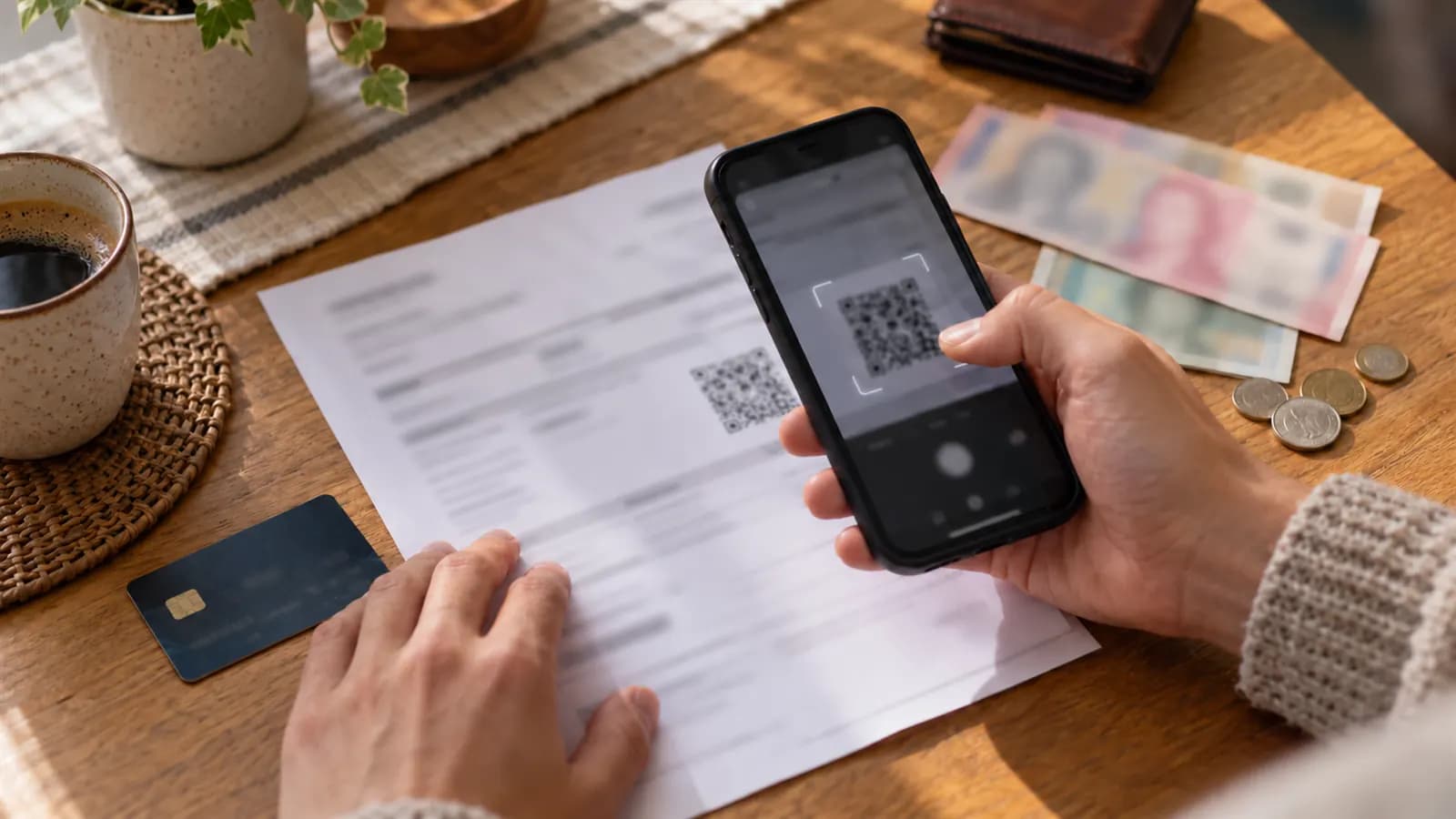
After you open a Serbian bank account, most day-to-day payments move through two systems. Dinar payments inside Serbia go through IPS, the National Bank of Serbia's instant payment system, which works 24 hours a day and lets you pay bills by scanning a QR code. Euro transfers to Europe go through SEPA, offered by 18 of Serbia's 19 banks since May 2026. For cash, licensed exchange offices (menjačnica) must post their rates and, under the current rules, may not charge commission on normal notes. We checked everything below on 1 November 2026.
Before you start: which account does what
If you do not have an account yet, start with our guide to opening a bank account in Serbia as a foreigner.
Most people hold a dinar current account (tekući račun) for daily life and a foreign-currency account (devizni račun) for euros. Why two? Under Article 34 of the Law on Foreign Exchange Operations, payments between residents, and between residents and non-residents, inside Serbia are made in dinars. The law lists exceptions where foreign currency may be used, and the sale and lease of real estate is one of them (see our guide to renting an apartment in Belgrade).
IPS: instant dinar payments
The National Bank of Serbia launched IPS on 22 October 2018. According to the NBS, it runs "24/7/365", and a single payment can be up to 300,000 RSD. Larger amounts go through the NBS's RTGS system instead.
At Banca Intesa, for example, all dinar transfers up to that amount go through IPS, so they arrive in seconds, even at weekends. There are four ways to pay with IPS:
- NBS IPS QR code on bills. Open your mobile banking app, choose the QR payment option, and scan the code printed on the bill. The payment order fills itself in, and you can check or change it before you confirm.
- IPS Skeniraj (IPS Scan). In a shop, you scan the merchant's QR code with your banking app and confirm with your PIN or fingerprint.
- IPS Pokaži (IPS Show). Your banking app generates a QR code, and the cashier scans it.
- Paying to a phone number. The NBS allows payments to an alias such as a mobile phone number, if both people have linked their number to their account with their bank.
In October 2025 the NBS said retail chains, petrol stations and drugstores accept IPS, and some banks offer QR payments free. You will need a Serbian mobile number for your banking app; see our guide to SIM cards and mobile internet in Serbia.
What a dinar transfer costs depends on the bank and the account package. At Banca Intesa (price list from 4 May 2026), transfers to another bank in e-banking and mobile banking cost from nothing to 30 RSD per order depending on the package. The same transfer at the counter costs 1% to 1.2% of the amount (minimum 100 to 150 RSD).
Paying utility bills
For bills from Infostan Tehnologije, the company's payment page lists these options:
- At the counters of Pošta Srbije and most banks.
- By standing order (trajni nalog) at your bank.
- In e-banking.
- By payment card on the e.Sanduče portal and app, which also delivers the bills electronically.
Since 1 July 2023, Infostan no longer covers the cost of counter payments, so the post office or bank charges its own fee. Infostan, EPS (electricity) and some other public utilities print the NBS IPS QR code on their bills, according to the NBS (October 2025), so scanning it in your app is usually the quickest way to pay. Our cost of living guide gives typical monthly amounts.
On a non-resident account, bill payments can be limited: Banca Intesa's price list says non-residents cannot pay utility or telecom bills above 60,000 RSD in its e-banking or mobile banking.
Advertise here
Your banner could be here
People open this page to plan their time in Belgrade. Put your venue, event or brand in front of them.
SEPA: euro transfers to and from Europe
Serbia joined the geographical scope of the Single Euro Payments Area on 22 May 2025. On 5 May 2026 the National Bank of Serbia announced that banks were ready to send and receive SEPA Credit Transfers. According to its FAQ of 18 May 2026, 18 of the 19 banks in Serbia joined, enabling transfers from 4 or 5 May 2026. No source we checked names the bank that is not taking part.
How it works, according to the NBS and the banks:
- Euros only. SEPA payments are made only in EUR. Banca Intesa and Erste list SEPA transfers as transfers from a euro foreign-currency account. To receive a SEPA payment at Raiffeisen you need a foreign-currency account. If your money is in dinars, you have to buy euros into your euro account first, at your bank's rate.
- IBAN. You need the recipient's IBAN. A wrong IBAN can mean the payment is rejected or sent back.
- Timing. The money reaches the payee's account within one business day of a complete order. SEPA transfers do not run 24/7: at Raiffeisen, orders are processed on working days with a 13:00 cut-off.
- Fees. Every SEPA payment uses the SHA option: each side pays its own bank, and the payee gets the full amount without deductions by intermediary banks.
- Paperwork still applies. When euros arrive, you give your bank the basis of the payment (a code for what it is for) by the next working day, with documents if needed. SEPA does not change the foreign exchange rules.
Instant SEPA transfers (SCT Inst) and SEPA direct debits were not part of the launch. N1 reported on 5 May 2026 that they were expected about a year later, and Raiffeisen's SEPA FAQ says that it, like the other banks in Serbia, uses only SEPA Credit Transfer.
What SEPA costs: it depends on your bank
From the banks' own price lists, checked on 1 November 2026:
- Banca Intesa (tariff from 4 May 2026): sending 0.08% (minimum 300 RSD, maximum 5,500 RSD), or 0.04% (minimum 150 RSD, maximum 2,750 RSD) in e-banking and mobile banking. Receiving 0.06% (minimum 100 RSD, maximum 15,000 RSD).
- Erste Bank (price list from 1 October 2026): sending 1,990 RSD in the general tariff or 990 RSD in the George app. Receiving 650 RSD.
On launch day, 5 May 2026, N1 published the SEPA fees of 17 banks. For individuals sending a transfer they ranged from flat fees such as 500 RSD (Banka Poštanska štedionica), 600 RSD (Srpska banka) and 950 RSD (OTP) to percentages such as 0.5% with a 750 RSD minimum (Raiffeisen). Several banks, including AIK, Mirabank and Srpska banka, charged nothing to receive. Check your bank's current tariff (tarifa naknada or cenovnik) before a large transfer.
Sending money abroad outside SEPA
Transfers in other currencies, or to countries outside SEPA, still go by SWIFT, and they usually cost more. At Banca Intesa, a non-SEPA euro transfer from a euro account costs 0.7% (minimum 1,000 RSD, maximum 40,000 RSD) in the general tariff, against 0.08% (minimum 300 RSD) under SEPA.
Non-residents face extra rules when sending money abroad; our bank account guide explains them.
Wise's page for sending money to Serbia, checked on 1 November 2026, says the recipient gets dinars in their Serbian bank account from Wise's local account. Money transfer services set their own exchange rates and fees, so compare the total you pay with your bank's.
Exchange offices (menjačnica)
Only banks, the public postal operator (Pošta) and exchange offices licensed by the National Bank of Serbia may exchange cash. Under the NBS decision on exchange operations, as amended up to October 2026, an exchange office must:
- Put up a "MENJAČNICA" sign in Serbian and one world language, and display its NBS licence.
- Set its rate list once a day at the start of business and display it so customers can see it.
- Tell you the total in dinars before the transaction, at the board rate or better (a notice in Serbian and English must say so).
- Give you a receipt (potvrda) for every purchase and sale.
Commission. The decision now allows commission only when the office buys damaged notes or notes no longer in circulation. On 16 December 2025 the NBS removed the commission on euro sales to the public, which had been capped at 1%.
The euro rate band. For licensed exchange offices and the post office, the euro buying rate cannot be more than 1.25% below the NBS official middle rate of the day, and the selling rate cannot be more than 1.25% above it.
If you want to buy more than EUR 5,000 or the equivalent in cash, you must tell the exchange office the working day before. At exchange offices at airports and ports, in the area behind border checks, the receipt records your name and passport number. Exchange offices may not swap one foreign currency for another; only banks may, depending on the bank. If you think an exchange office broke the rules, you can file a complaint with the NBS online or call its Info centre on 0800 111 110. If you are arriving soon, see our airport to city centre guide and first 48 hours in Belgrade.
Cards
Besides Visa and Mastercard, Serbian banks issue DinaCard, the national payment card. You can use it in shops, online, by mobile phone and to withdraw cash. An international version, issued with two international card schemes, also works abroad.
Frequently asked questions
Can I send a SEPA transfer from my dinar account?
No. SEPA payments in Serbia are made only in euros, from a euro foreign-currency account. Buy euros into that account first, then send the transfer.
How long does a SEPA transfer from Serbia take?
The money reaches the payee's account within one business day of a complete order. SEPA Credit Transfers do not run at weekends, and banks have daily cut-offs, such as 13:00 at Raiffeisen. We found no bank in Serbia offering instant SEPA when we checked on 1 November 2026.
Which Serbian banks offer SEPA?
18 of the 19 banks operating in Serbia, according to the National Bank of Serbia, with transfers enabled from 4 or 5 May 2026. Fees are set by each bank, so compare price lists.
What is the limit for an IPS instant payment?
300,000 RSD per payment, according to the National Bank of Serbia. Larger dinar payments go through the NBS's RTGS system instead. IPS itself runs 24 hours a day, every day of the year.
How do I pay my Infostan bill?
Scan the NBS IPS QR code on the bill in your banking app, pay in e-banking, set up a standing order, pay by card on the e.Sanduče portal, or pay at a Pošta Srbije or bank counter, which charges its own fee.
Do exchange offices in Serbia charge commission?
Not on normal notes. Under the National Bank of Serbia's current decision, an exchange office may charge commission only when it buys damaged notes or notes no longer in circulation. For euros, licensed exchange offices must stay within 1.25% of the NBS official middle rate, and they must give you a receipt.
Can I use Wise to pay rent in Serbia?
Wise says it can send dinars to a Serbian bank account from its local account. Real estate leases are also one of the cases where Serbian law allows payment in foreign currency, so ask your landlord which account and currency they want.
For the other first steps after you arrive, see our moving to Belgrade relocation checklist.
Sources
Official sources:
- National Bank of Serbia: SEPA payments operational in Serbia as of today (5 May 2026)
- Narodna banka Srbije: SEPA u Republici Srbiji, najčešća pitanja i odgovori (18 May 2026)
- National Bank of Serbia: Understanding SEPA, what it brings to citizens and the economy (15 July 2026)
- National Bank of Serbia: IPS NBS instant payments
- National Bank of Serbia: More cost-effective payments with the IPS NBS system (15 October 2025)
- National Bank of Serbia: Instant payments, NBS IPS system
- National Bank of Serbia: DinaCard
- Narodna banka Srbije: Menjački poslovi
- Narodna banka Srbije: Odluka o uslovima i načinu obavljanja menjačkih poslova (consolidated text to Službeni glasnik 103/2026)
- Narodna banka Srbije: Odluka o izmenama i dopunama Odluke o uslovima i načinu obavljanja menjačkih poslova (16 December 2025)
- Paragraf: Zakon o deviznom poslovanju (Law on Foreign Exchange Operations)
- Infostan Tehnologije: Plaćanje računa
Banks and payment providers:
- Banca Intesa: Tarifa naknada za usluge za fizička lica (from 4 May 2026)
- Erste Bank: Cenovnik proizvoda i usluga za stanovništvo i RPG (from 1 October 2026)
- Raiffeisen banka: SEPA plaćanje u evrima
- Raiffeisen banka: SEPA system, questions and answers (2026)
- Wise: Send money to Serbia
News reports:
- N1: Srbija danas ulazi u SEPA šemu jedinstvenog područja za plaćanja u evrima (5 May 2026)
- N1: Detaljan tarifnik provizija za SEPA plaćanja u evrima po bankama (5 May 2026)
- Biznis Kurir: SEPA transfer novca iz Srbije, vodič i najčešća pitanja (21 May 2026)
- Biznis.rs: NBS ukinula proviziju za menjačke poslove (16 December 2025)
Checked 1 November 2026
Was this guide useful?
Report outdated info